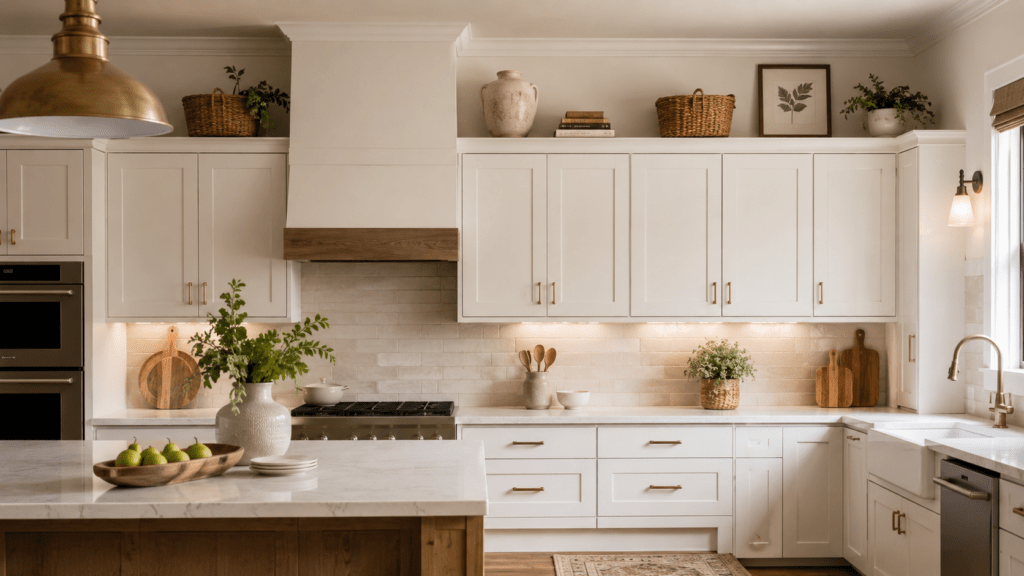

If you’ve ever looked around your kitchen and wondered what to do with the awkward space between your upper cabinets and the ceiling, you’re not alone. This often-overlooked area is the perfect opportunity for above kitchen cabinet decor that adds personality, warmth, and visual interest to your space. It’s one of the most common decorating challenges in American kitchens, particularly in homes with standard 30-inch upper cabinets beneath 8- or 9-foot ceilings.
Some homeowners fill it. Some leave it bare on purpose. Both are valid choices. What trips people up is how to fill it well — without the space looking cluttered, dusty, or stuck in 2012 farmhouse mode.
This guide walks through when to decorate (and when not to), the best above-cabinet decor ideas by style, real product categories to shop, a buying guide that actually explains the “why” behind each choice, and the mistakes that make this space look worse instead of better.
Should You Decorate Above Your Kitchen Cabinets?
Before picking out baskets and greenery, it’s worth asking whether this space needs decor at all. Not every kitchen benefits from it.
When It’s Worth Decorating
- Your cabinets stop noticeably short of the ceiling. A gap of 12 inches or more reads as “unfinished” if left empty — it draws the eye and makes the kitchen feel incomplete.
- Your kitchen style leans traditional, farmhouse, or cottage. These styles tend to embrace collected, layered display, so the space becomes an asset rather than a distraction.
- You want a display spot that isn’t precious real estate. Above-cabinet space is a low-stakes place to show off collectibles, cookbooks, or seasonal pieces without cluttering your counters.
When to Leave It Empty
- Your kitchen is modern, sleek, or minimalist. Empty space is a design choice in these styles — filling it can undercut the clean lines you’re going for.
- The area is hard to reach or sits near a vent. If you need a ladder every time you want to dust it, or it’s directly above a range hood where grease and heat collect, it may cause more maintenance headaches than it’s worth.
- Your cabinets already run to the ceiling. No gap, no decision to make — this section doesn’t apply to you.
There’s no universal right answer here. The test is simple: does the empty space look intentional, or does it look forgotten? If it’s the latter, it’s worth decorating.
How Much Space Do You Actually Have?
This step gets skipped constantly, and it’s the reason so many above-cabinet displays look either sparse or crammed.
Measuring Your Gap
Grab a tape measure and note two numbers: the height of the gap (top of cabinet to ceiling) and the depth of your cabinets (usually 12–13 inches for uppers). These two numbers determine what will actually look proportional up there.
- Under 10 inches of height: Stick to low-profile items — flat baskets, small artwork leaned at an angle, shallow trays.
- 10–16 inches: The sweet spot for most decor — vases, stacked baskets, small plants, decorative jars.
- 16+ inches: You can go bigger — oversized urns, tall greenery, layered vignettes with height variation.
Reach & Ladder Considerations
Be honest with yourself about maintenance. If you’re not going to get a step stool out every month to dust, avoid anything with a lot of texture (woven baskets, fabric, dried florals) that traps dust and grease residue. Smooth ceramic, glass, and sealed wood are far easier to wipe down from a distance with a duster on an extension pole.
If your cabinets sit directly above the stove, this matters even more — grease particles travel further than people expect, and porous materials will absorb odor and residue over time.
Above Kitchen Cabinet Decor Ideas by Style
Here’s where the IDEA → WHY → HOW → PRODUCT → TIP framework comes in. Each idea below is broken down so you know not just what to buy, but why it works and how to actually install it well.
Farmhouse & Cottage Style
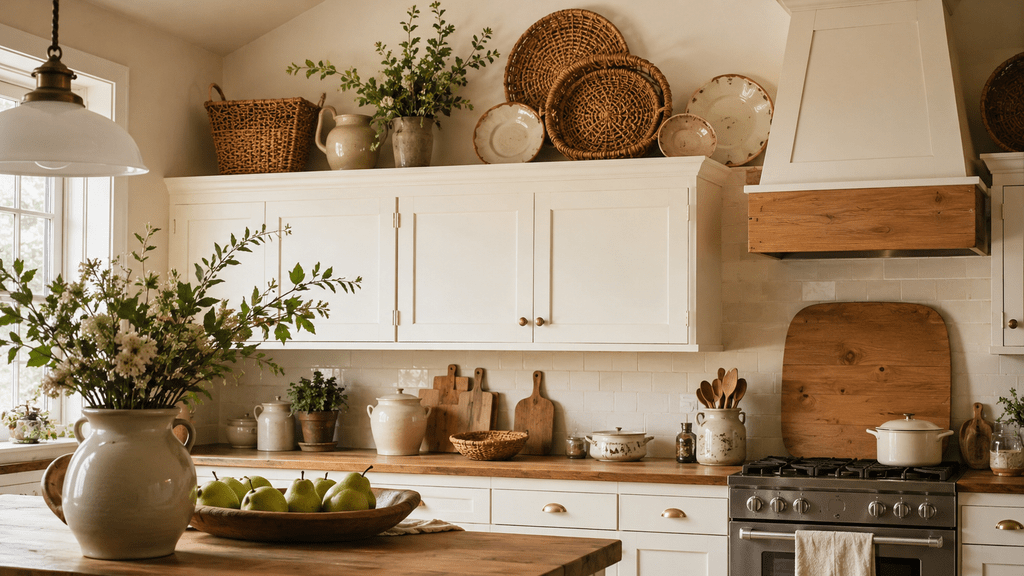
IDEA: Woven Baskets
WHY: Baskets add warmth and texture without visual weight, and they read as “collected over time” rather than store-bought — a hallmark of farmhouse style.
HOW: Use an odd number (3 or 5), vary the sizes, and angle a couple of them rather than lining them all up flat-front. Leave breathing room between groupings instead of spacing them evenly like soldiers.
PRODUCT: Look for rattan or seagrass baskets sold in graduated sets — they’re designed to nest and vary in scale automatically. Check the products on Amazon.
TIP: Spray baskets with a clear matte sealant before placing them near a stove. It protects against grease absorption and makes wipe-downs painless.
IDEA: Vintage or Vintage-Style Dishware
WHY: Plates and pitchers on display tell a story and add color without needing wall space — perfect if you collect stoneware, transferware, or family heirlooms.
HOW: Use plate stands or a narrow ledge to prop pieces upright. Layer a charger plate behind a smaller plate for visual depth instead of laying everything flat.
PRODUCT: Adjustable metal plate stands (the kind with a felt-lined base) work across almost any dish size. Check the product on Amazon.
TIP: Keep breakables toward the back of the cabinet top, not the front edge — a bumped cabinet door or a step stool wobble shouldn’t send anything crashing down.
Modern & Minimalist Style
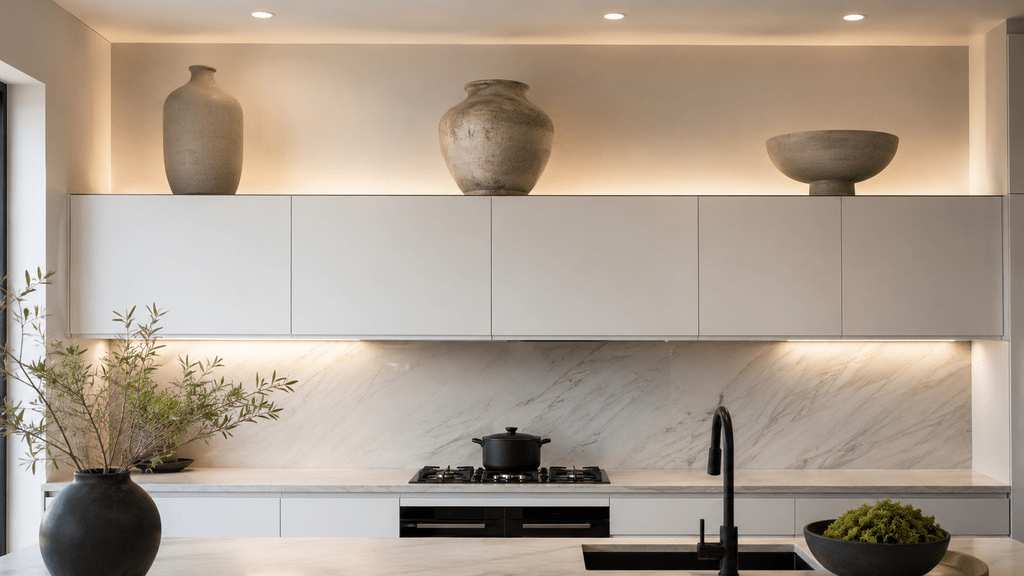
IDEA: Oversized Neutral Vessels
WHY: In a modern kitchen, one design rule beats all others: fewer, bigger pieces read as intentional; many small pieces read as clutter.
HOW: Choose two or three large-scale items — a tall ceramic vase, a wide urn, a sculptural bowl — in a tight, neutral color palette (white, cream, matte black, stone gray). Space them with generous negative space between each.
PRODUCT: Matte ceramic vases in the 12–18 inch height range, sold individually rather than in busy sets. Check the products on Amazon.
TIP: Resist the urge to fill every inch. In minimalist kitchens, the empty space around your decor is part of the design.
IDEA: Statement Lighting
WHY: Instead of hiding the gap, some designers turn it into a feature by adding light — it draws the eye upward on purpose and adds function along with style.
HOW: Install swing-arm sconces or a row of small spotlight fixtures along the top of the cabinets, wired to a switch or using battery-operated puck lights for a no-electrician option.
PRODUCT: Battery-powered LED puck lights with remote control are the easiest renter-friendly version of this idea. Check the product on Amazon.
TIP: Choose a fixture finish that contrasts with your cabinet color (matte black on white cabinets, brass on navy) so it reads as a deliberate accent, not an afterthought.
Traditional & Vintage Style
IDEA: Framed Art or Prints
WHY: Most people don’t think to hang art above their kitchen cabinets, but a themed grouping — botanical prints, vintage food illustrations, black-and-white photography — adds a gallery feel that’s rare in kitchens.
HOW: Lean frames rather than hanging them if the ceiling is low; this also makes seasonal swaps easier. Stick to one theme or color palette so the grouping feels curated.
PRODUCT: Lightweight framed prints (avoid heavy glass-front frames up high, for safety). Check the product on Amazon.
TIP: This idea works best when cabinets aren’t too close to the ceiling — you need enough height for the frame to read clearly from below.
IDEA: Wood Cutting Boards & Serving Trays
WHY: Displaying kitchen tools instead of purely decorative objects feels authentic to the room — it celebrates craftsmanship rather than pretending the space is a living room shelf.
HOW: Arrange boards and trays vertically in a plate rack or wide-slot stand, varying wood tones and sizes for visual rhythm.
PRODUCT: A tiered wood or metal plate rack designed for vertical display (not just flat stacking). Check the products on Amazon.
TIP: Rotate pieces you actually use into the display occasionally — it keeps the collection from feeling static and gives you a reason to dust it regularly.
Coastal & Light, Airy Style
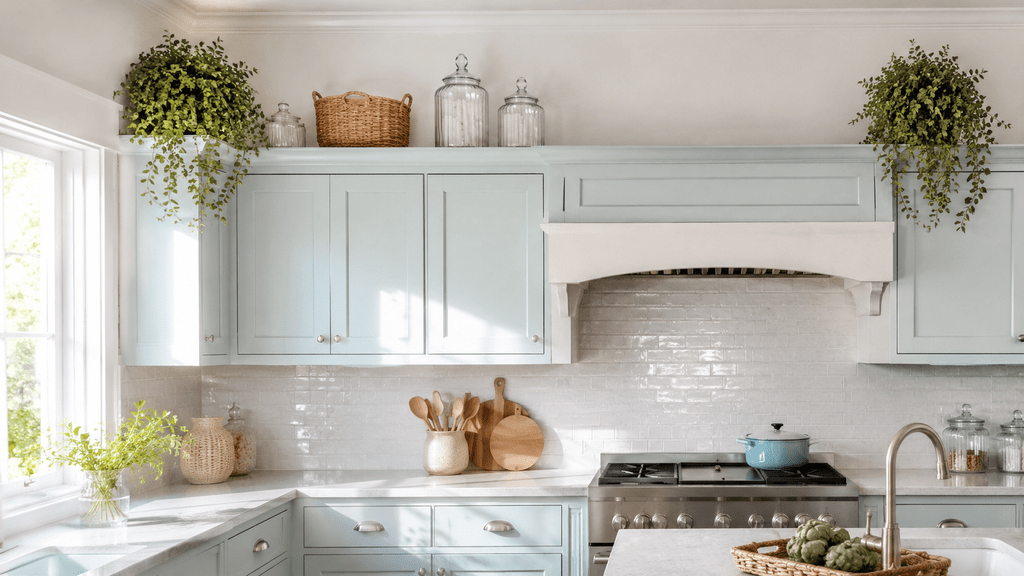
IDEA: Faux Greenery & Trailing Vines
WHY: Greenery softens the hard lines of cabinetry and adds a fresh, organic feel — especially useful in kitchens with little natural light or no room for real plants.
HOW: Drape trailing vines from the corners so they cascade down slightly, using clear press-on hooks to anchor them. Trim vines so they never interfere with opening cabinet doors.
PRODUCT: High-quality silk or preserved botanicals — avoid stiff, shiny plastic greenery, which reads as cheap up close. Check the products on Amazon.
TIP: Real plants are almost never a good idea directly above cabinets — inconsistent watering access and heat from below aren’t kind to living plants. Save real greenery for the counter or windowsill.
IDEA: Woven Textures + Glass Bottles
WHY: Pairing organic texture (rattan, jute) with clear or colored glass keeps a coastal look feeling light rather than heavy.
HOW: Group 2–3 clear glass bottles or apothecary jars beside a single woven basket for contrast in material without adding visual clutter.
PRODUCT: Clear glass apothecary jars or decorative bottles in varied heights. Check the products on Amazon.
TIP: Keep the color palette tight — whites, sea glass blues, and natural wood tones — so the grouping feels cohesive rather than random.
Product Categories to Shop
| Category | Best For | Price Range Feel |
|---|---|---|
| Decorative baskets | Farmhouse, cottage | Budget to mid-range |
| Faux greenery & garlands | Coastal, farmhouse, any low-light kitchen | Budget |
| Vases & urns | Modern, minimalist, traditional | Mid-range to splurge |
| Decorative signs & wall art | Farmhouse, traditional, eclectic | Budget to mid-range |
| Plate stands & display dishware | Traditional, vintage, cottage | Budget to mid-range |
| Battery LED lighting | Modern, any renter-friendly kitchen | Mid-range |
| Wood trays & cutting boards | Traditional, transitional | Budget to mid-range |
| Storage bins with lids | Any style needing hidden storage | Budget |
Buying Guide: What to Look for Before You Shop
1. Scale Matters More Than Style
This is the single most repeated lesson from designers who work with this space: a few oversized pieces beat a crowd of small ones, every time. Small tchotchkes get visually swallowed by the large, flat expanse above cabinets — they just look lost. Before buying anything, ask whether the piece is large enough to hold its own from floor level, since that’s the vantage point most people will actually view it from.
2. Material & Heat/Grease Safety
If your cabinets are within a few feet of the stove, prioritize materials that are easy to wipe clean: glazed ceramic, sealed wood, glass, and metal. Avoid unsealed wicker, fabric, dried florals, or anything with deep texture directly in the grease zone — they’ll trap residue and become genuinely difficult to clean within a year.
3. Color Cohesion
Your above-cabinet decor should pull from colors already in the room — cabinet color, countertop veining, backsplash tone, or wall paint. A tight, cohesive palette (2–3 colors max) will always look more intentional than a rainbow of mismatched pieces, no matter how nice each individual item is.
4. Budget Tiers
| Tier | Approach | Example Items |
|---|---|---|
| Thrifted / DIY | Secondhand stores, your own collection | Vintage plates, mason jars, wood crates |
| Mid-range (Amazon staples) | New but affordable, widely available | Faux greenery sets, ceramic vases, baskets |
| Splurge | Statement pieces, better materials | Sculptural urns, designer lighting, framed art |
A strong display often mixes tiers — one splurge piece as a focal point, filled out with budget and thrifted items around it.
5. Weight & Stability
Anything placed above cabinets should be stable enough not to shift when a cabinet door below is opened and closed (the vibration is more noticeable than people expect). Avoid top-heavy or narrow-based items unless they’re secured, and keep heavier pieces toward the back rather than the front edge.
Common Mistakes to Avoid
- Using too many small items. It’s the #1 reason above-cabinet displays look cluttered instead of curated. Edit down to fewer, larger pieces.
- Ignoring the grease zone. Porous materials directly above a stove will absorb odor and residue faster than anywhere else in the kitchen.
- Overcrowding with no negative space. Even maximalist styles need breathing room between groupings — pack every inch and it reads as “shelf,” not “display.”
- Mismatching styles. A sleek modern kitchen with rustic farmhouse baskets (or vice versa) will always feel slightly off, no matter how nice the individual pieces are.
- Forgetting maintenance. If a piece requires monthly dusting and you know you won’t do it, choose something lower-maintenance instead — or skip decorating that spot altogether.
- Placing breakables too close to the front edge. Cabinet door vibration and step-stool wobble are real risks; keep fragile items set back.
Seasonal Refresh Ideas
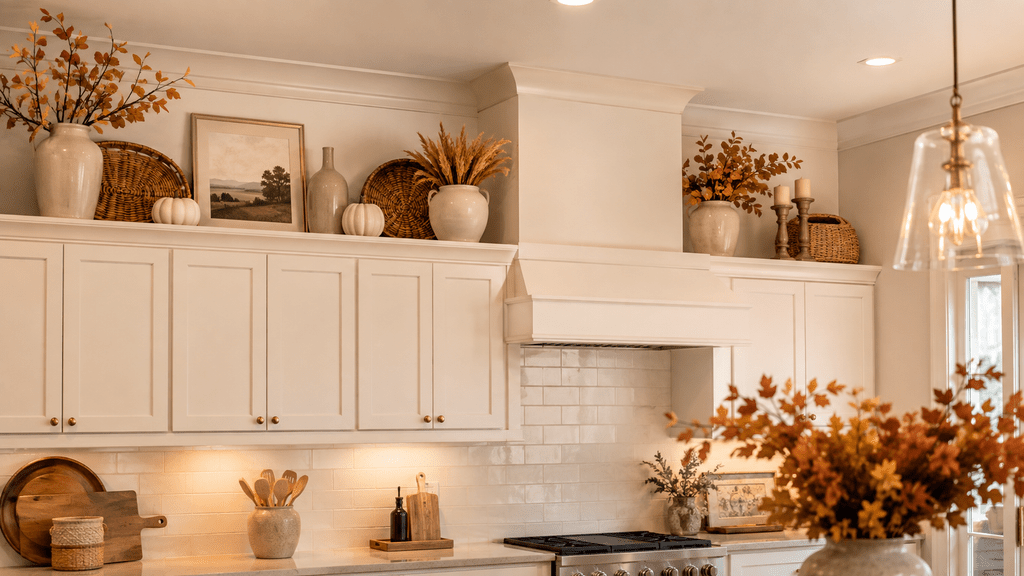
One advantage of decorating above your cabinets: it’s an easy, low-effort spot to rotate seasonal touches without redoing your whole kitchen.
- Fall: Swap in small pumpkins (faux, to avoid rot near heat), dried wheat stems, or warm-toned foliage among your existing baskets.
- Christmas: Add mini artificial trees, string lights, or greenery garland draped along the front edge of the cabinets.
- Everyday / neutral: Keep a base layer of your year-round pieces (vases, baskets, art) that stays in place, then simply add or remove seasonal accents on top — this way you’re never starting from scratch each season.
FAQ
Should I decorate above my kitchen cabinets, or leave it empty? It depends on your kitchen style and the size of the gap. Traditional and farmhouse kitchens usually benefit from decor; modern and minimalist kitchens often look better with the space left intentionally bare.
What do you put in the gap above kitchen cabinets? The most common choices are decorative baskets, faux greenery, vases, decorative signs, and display dishware — chosen based on your kitchen’s style and the height of your gap.
Is it OK to put decor above cabinets near the stove? It can be, but stick to easy-to-clean materials like glazed ceramic, glass, sealed wood, and metal. Avoid porous or textured materials that trap grease and dust in that zone.
How do you decorate above cabinets without it looking cluttered or dated? Use fewer, larger pieces instead of many small ones, keep your color palette tight, and leave visible negative space between groupings rather than filling every inch.
What size gap is normal above kitchen cabinets? It varies by home, but many standard kitchens have a gap somewhere between 6 and 18 inches, depending on ceiling height and cabinet style. Measure yours before shopping.
Can I add storage instead of just decor up there? Yes — lidded storage bins or baskets with fabric liners can hide seasonal items or rarely used kitchenware while still looking intentional from below.
How often should I dust above kitchen cabinets? Once a month is a reasonable baseline for most homes, more often if the space is near a stove. Choosing smooth, low-texture materials makes this task much faster.
What’s a cheap way to decorate above kitchen cabinets? Start with what you already own — pitchers, cookbooks, or dishware — and fill gaps with budget-friendly faux greenery or a single inexpensive basket set rather than buying everything new at once.
Conclusion
The space above your kitchen cabinets doesn’t have to be an afterthought, but it also doesn’t have to be filled just because it’s empty. Start by deciding whether your kitchen’s style actually calls for decor there. If it does, measure your gap, pick a style direction, and follow the core rule that holds up across every design style: fewer, larger, well-chosen pieces will always outperform a crowd of small ones.
Use the buying guide above to steer your material and budget choices, watch for the common mistakes that make this space look cluttered instead of curated, and don’t be afraid to rotate pieces seasonally — it’s one of the lowest-effort refreshes in the entire kitchen.
Looking for more ways to style the rest of your kitchen? Check out our guides on open shelving ideas and budget-friendly kitchen decor for more room-by-room inspiration.