
How to organize a small kitchen on a budget doesn’t have to be complicated or expensive. With a few smart storage ideas, simple DIY solutions, and some decluttering, you can create a kitchen that feels more spacious, functional, and organized without spending a lot of money.
Start by measuring your available space and identifying the items you use most often. Then, focus on affordable solutions such as floating shelves, pegboards, clear containers, drawer dividers, tension rods, and repurposed household items. These simple changes can free up valuable cabinet and countertop space while making everyday cooking easier.
Key Takeaways
- Designate a home for every item to reduce clutter and speed up prep.
- Prioritize frequently used tools for easy access and better workflow.
- Use vertical space—shelves, racks, and pegboards—to free counter and cabinet room.
- Choose low-cost, high-impact fixes like clear containers and magnetic strips.
- Adopt simple habits—one-in/one-out and regular edits—to keep a small kitchen organized.
Assessing your small kitchen and setting a budget
Start by measuring every area you can use. Note the spots that cause trouble. Decide what you need to keep before you spend money.
Measure and map usable space
Use a tape measure to record the size of cabinets, counters, and gaps. Note the width of cabinet doors for over-the-door organizers. Sketch out blank walls, the backsplash, and cabinet tops.
This helps you see where shelves, hooks, or a cart will go.
Prioritize storage needs
Make a list of your most-used items: pots, pans, small appliances, spices, and food containers. Rank them by how often you use them and how much space they take up. If clutter on counters bothers you, start with solutions for that.
If your pantry is too full, focus on getting more storage for food.
Set a realistic low-cost budget
Decide on a budget before you start shopping. Look for free fixes and low-cost items. Many projects cost under $20 and take less than 20 minutes.
Use items like magazine holders and tension rods. Find clear containers and drawer dividers at dollar stores or big-box retailers.
Before buying, take stock of what you already have. Getting rid of clutter can free up space and reduce what you need to buy. This makes it easier to organize your kitchen on a budget.
Declutter and edit to maximize space
Before you buy organizers, get rid of clutter first. A quick clean-up can make drawers and cabinets look bigger. Use simple rules to make decisions fast and avoid doubts.
Declutter by use and duplicates
Sort items by how often you use them. Keep daily essentials within reach. Move seasonal or rare tools to higher or farther spots.
Choose one primary version of each item. For example, pick a full-size blender or an immersion blender, not both. Match food-storage lids to bottoms and toss the rest. This reveals free shelf space quickly.
Create donate, keep, and toss piles
Work with three clear piles: donate, keep, toss. Use quick criteria like last use, condition, and frequency to speed up the process.
Label boxes and move the donate pile out of the kitchen the same day. Clearing space quickly helps you see affordable kitchen organization options. It keeps you motivated.
Adopt a one-in/one-out rule
Prevent future build-up by removing an item when you bring in a similar one. This simple habit keeps cabinets from overflowing. It also cuts the need for extra storage purchases.
Combine the one-in/one-out rule with small maintenance checks every three months. This practice supports organizing a tiny kitchen on a budget. It makes it easier to declutter kitchen spaces again later.
| Task | Action | Result |
|---|---|---|
| Identify duplicates | Choose the best-performing or most-used item | Frees shelf and counter space |
| Match lids and containers | Pair, discard unmatched pieces | Creates compact stacks and clearer cabinets |
| Donate quick | Box and remove donations same day | Prevents re-accumulation and motivates further editing |
| One-in/one-out | Remove or donate when adding similar item | Maintains long-term order with no extra spending |
Make vertical space work with shelves and racks
Small kitchens can be super functional with vertical storage ideas. Don’t just think about the lower cabinets. Use blank walls for everyday dishes and appliances. Open displays make the room feel bigger and more open.
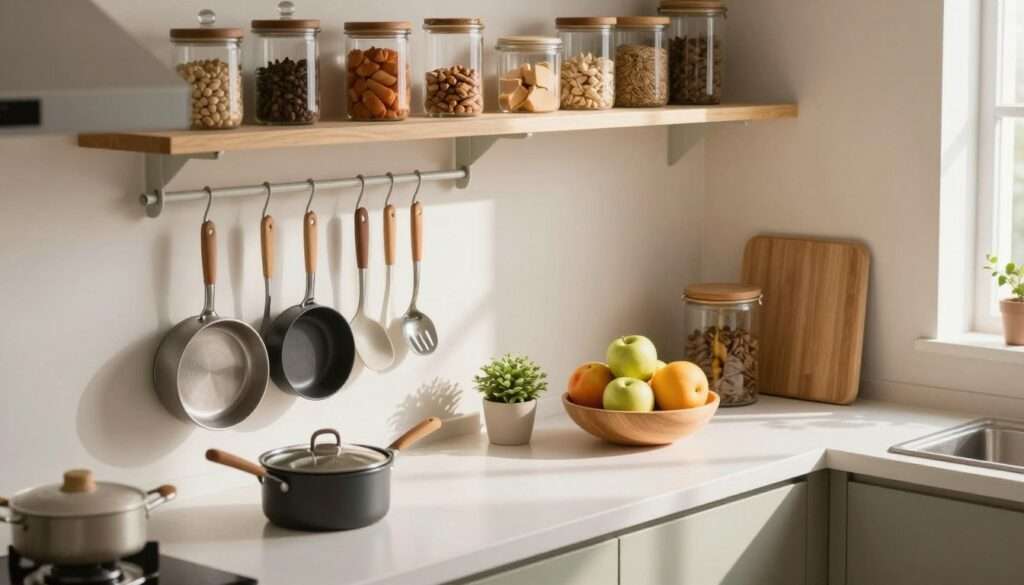
Install open floating shelves for mugs, plates, and glassware. Add hooks under the lowest shelf for hanging mugs, ladles, or a hand towel. This keeps counters clear and makes daily items easy to reach.
Put a high ledge or top-shelf storage near the ceiling for less-used items. Use labeled baskets for seasonal bakeware, extra oils, or decorative bottles. Storing these items up high keeps the main area tidy and clutter-free.
Mount wire racks and stainless shelving on empty walls for pans, small appliances, or bulk pantry goods. Restaurant-style stainless racks are durable, affordable, and save cabinet space. Wire shelving also helps keep foods visible and fresh.
For a built-in look without the cost, remove cabinet doors to create open shelving. Paint or line the interior, then arrange items by how often you use them. This simple change fits budget-friendly shelving solutions and looks great.
Below is a simple comparison to help choose the right approach based on cost, durability, and best use.
| Solution | Estimated Cost | Durability | Best Use |
|---|---|---|---|
| Floating wood shelves | $25–$80 per shelf | Moderate with proper mounting | Everyday dishes, mugs, decorative items |
| High ledge with baskets | $20–$100 for ledge + baskets | High — out of reach, low wear | Seasonal items, bulk cooking oils, extra serve ware |
| Wire racks / stainless shelving | $40–$150 for multi-tier units | High — commercial grade options | Small appliances, bulk pantry, heavy cookware |
| Open cabinet conversion | $0–$30 (remove doors, paint) | Variable — depends on cabinet condition | Instant stylistic update; display and daily access |
Smart cabinet interiors: door and vertical organizers
Small cabinets can hold a lot when you use smart organizers. Door pockets and shallow shelves help keep small items in sight. Hooks and magnetic strips on doors clear clutter and keep tools handy.
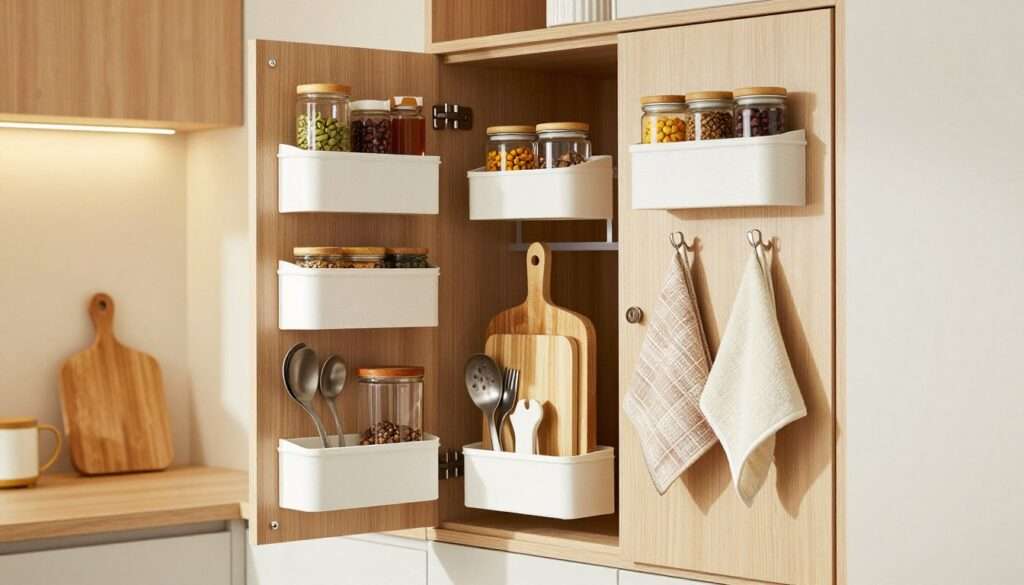
Use over-the-door shelves and shallow door pockets
Over-the-door shelves are great for holding items like spice packets and snack boxes. Shallow pockets in doors are perfect for small items. Choose slim organizers to avoid bulk.
Mount hooks and magnetic strips inside doors
Cup hooks are great for hanging items like oven mitts and dishcloths. Adhesive hooks from 3M are easy to use without damaging doors. A magnetic strip inside a cabinet keeps knives safe and frees up drawer space.
Fit tension rods and shelf risers inside cabinets
Tension rods can be used to create slots for lids and baking sheets. They’re adjustable and affordable, perfect for rented spaces. Adding fold-flat risers creates extra space for plates and mugs.
Door-mounted hangers for spray bottles keep cleaning supplies out of sight but within reach. These solutions turn a small cabinet into a tidy, efficient space that supports daily tasks.
| Problem | Low-cost fix | Best use |
|---|---|---|
| Loose lids and trays | Tension rods in cabinets placed vertically or horizontally | Upright storage for lids, baking sheets, and cutting boards |
| Crowded drawers | Magnetic strip knife storage mounted inside a cabinet | Free drawer space and safer knife access |
| Small bottles and sprays | Over-the-door shelves and spray bottle hangers | Hidden yet reachable cleaning zone |
| Mixed plates and cups | Collapsible shelf risers or risers that fold flat | Create temporary extra shelf space for dishes |
| Mismatched utensils | Adhesive or screw-in hooks on the inside of doors | Hang ladles, tongs, and measuring cups for quick access |
Drawer organization and small-item containment
Small kitchens need organized drawers. Begin by sorting items: throw away broken ones and group similar items together. This makes finding what you need quicker and keeps your counters clear.
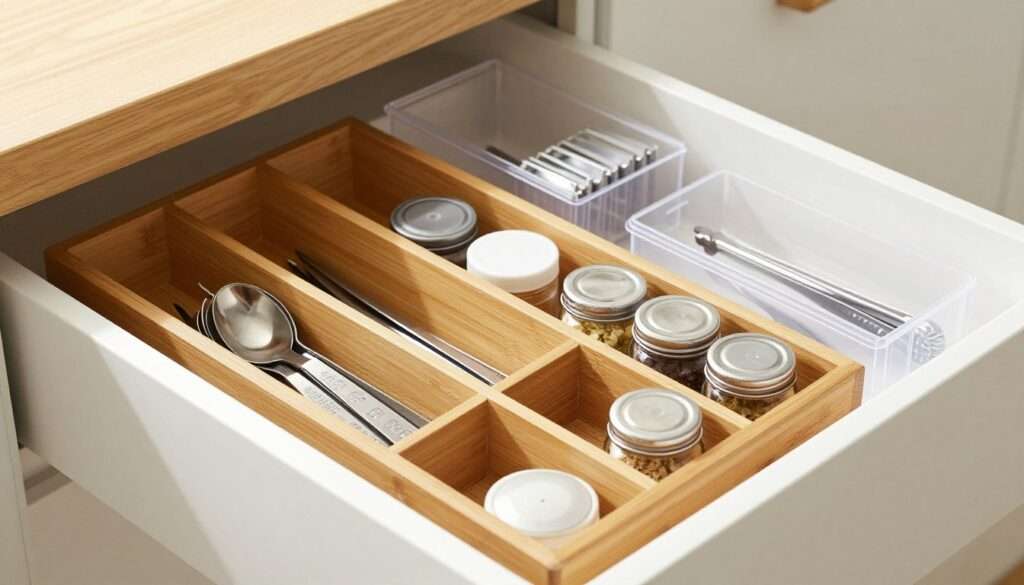
Drawer dividers help keep things tidy. You can buy adjustable ones or make your own from wood or cardboard. This way, you can easily find utensils and tools.
Use bins to organize similar items. You can find these at dollar stores or IKEA. For example, small trays and baskets are great for storing packets and condiments. Labeling these bins helps everyone keep things in order.
Save space with a smart food storage system. Stack container bottoms and store lids in a divider or magazine holder. This makes it easier to find the right lid for your containers.
Here’s a bonus tip: use a magazine holder to store water bottles or tall condiments. Small changes like this can make a big difference in your kitchen’s efficiency.
Pantry and open shelf hacks for food storage
Small kitchens need smart ways to store food. Mix clear containers, baskets, and mobile furniture for easy access. These hacks save time, reduce waste, and keep shelves neat.
Use clear bulk containers and label everything
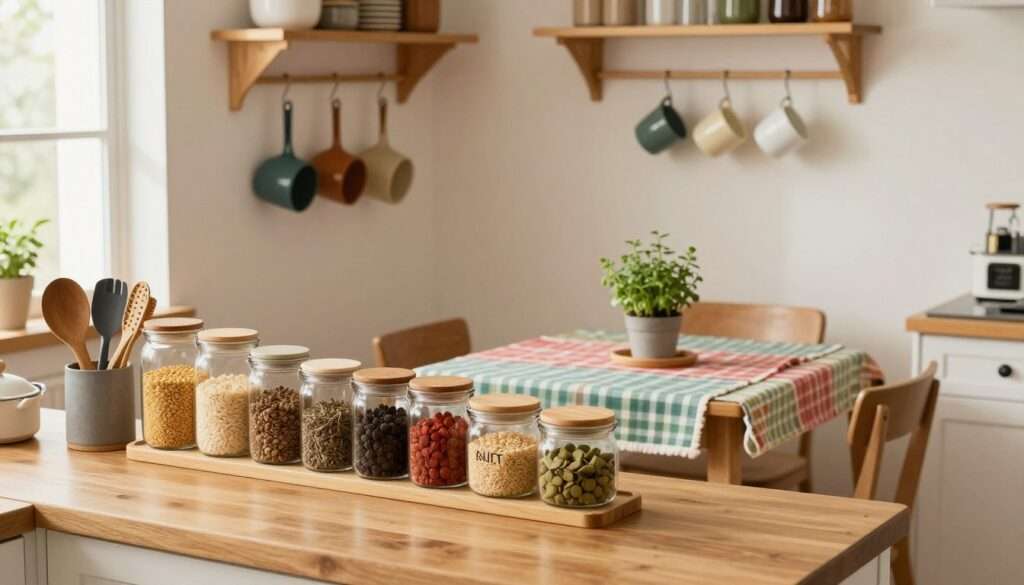
Move cereals, rice, pasta, and baking supplies into clear containers. Brands like OXO or Rubbermaid work well. Clear containers make it easy to see what’s inside, cut down on packaging, and make shelves look good.
Label each container with what’s inside and when you bought it. A label maker or a marker on masking tape works great. This helps avoid expired food and makes meal prep faster.
Employ baskets and labeled bins for categories
Use baskets or bins to organize snacks, breakfast items, and produce. Choose neutral wicker or colorful plastic bins from The Container Store or IKEA to fit your kitchen.
Put labeled bins where you can easily see them. Labels like “snacks,” “breakfast,” and “baking” help everyone find what they need quickly.
Create a makeshift pantry with a rolling cart or bookcase
Turn a rolling cart, an IKEA BILLY bookcase, or a small dresser into a pantry. Add pull-out trays or drawers for better visibility and access.
Put often-used items in the middle and heavy things at the bottom. Use the top for extra storage with a wire rack or drawer organizer.
| Hack | Best for | Affordable Items |
|---|---|---|
| Clear bulk storage | Cereals, grains, pet food | OXO containers, Rubbermaid canisters, label maker |
| Baskets and labeled bins | Snacks, produce, breakfast kits | IKEA baskets, The Container Store bins, masking tape |
| Makeshift pantry solutions | Small kitchens, apartments | Rolling utility cart, BILLY bookcase, stacking drawers |
| Top-of-fridge storage | Canned goods, rarely used bulk items | Stackable can racks, shallow baskets |
Repurpose inexpensive household items for storage
Small kitchens can become more functional with a little creativity. You can turn everyday items into storage solutions without spending much. Look for items at dollar stores, thrift shops, and in your own home for quick and stylish projects.
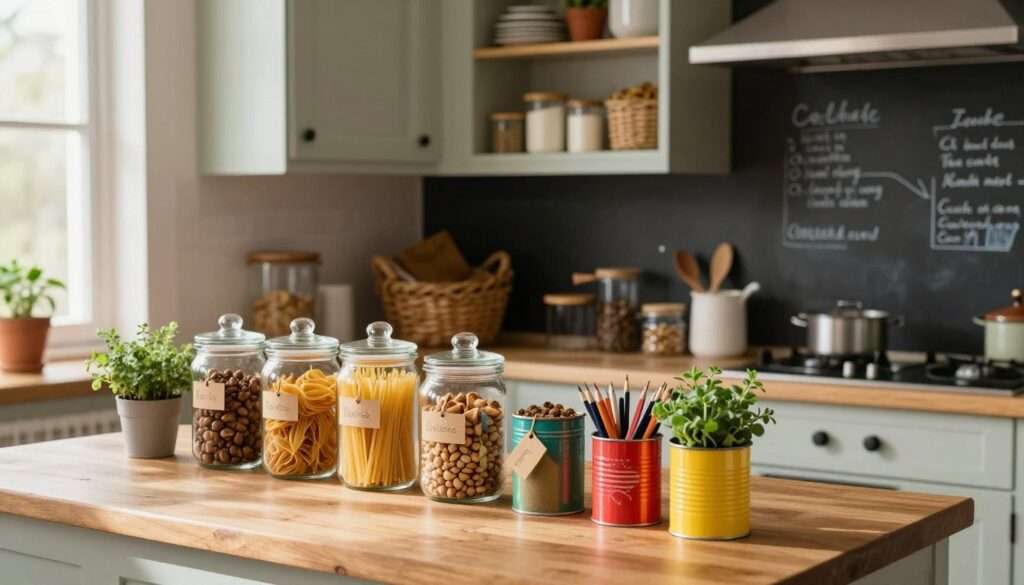
Magazine holders are great for keeping bottles and slim items organized. Simply flip them over to create horizontal slots. This trick saves space and makes it easier to grab what you need.
Glass jars and crates can also help organize your kitchen. Use mason jars for utensils, scoops, or single-serve containers. Label the lids or use chalkboard tags for easy identification. Vintage metal caddies and wicker baskets are perfect for storing spices, produce, or napkins.
Pegboards can transform empty walls into useful storage. Hang pots, pans, and tools on a pegboard near your stove or prep area. Add small shelves and S-hooks for ladles, strainers, or herb planters to keep your counters clear.
Dollar-store bins and trays are great for finishing touches. Use them to corral snacks, organize drawers, and protect surfaces. These items help you create a cohesive look without breaking the bank.
Below is a compact comparison of common repurpose pieces, best uses, and durability notes to guide quick decisions.
| Item | Best use | Durability |
|---|---|---|
| Magazine holder (plastic/wood) | Horizontal bottle storage, canned goods, cutting boards | High — holds shape, easy to clean |
| Mason jars / glass jars | Utensil caddies, pantry scoops, dry goods jars | High — nonporous, reusable, stackable with lids |
| Vintage crates / metal caddies | Moveable spice racks, produce bins, display trays | Medium — sturdy but may need lining |
| Pegboard with hooks | Hanging pots, pans, utensils, small shelves | High — very flexible and reconfigurable |
| Dollar-store bins & trays | Drawer dividers, shelf baskets, under-sink sorting | Medium — replaceable and inexpensive |
Organizing cookware and bakeware in tight cabinets
Small kitchens need smart ways to organize pots and pans. A few simple changes can free up shelf space and make cooking easier. Place heavy items near the cooktop for quick access.
Begin by using pan rack cabinet solutions for plates or baking sheets. Metal organizers and dividers make skillets and sheet pans easy to find. Lid organizers keep lids in order, preventing clutter that rattles when doors open.
Hang pots where there’s room, using S-hooks or a small rail. A shallow rail in an upper cabinet or under a shelf is great for rolling pins and long tools. Command Strips offer a nonpermanent solution for renters.
Replace bulky items with collapsible cookware and nested sets to save space. Collapsible silicone bowls and pots fit in drawers or stack on shelves. Nested stainless or cast-iron sets keep cookware organized and ready.
Follow these steps for smooth access:
- Everyday pans near the stove
- Rarely used bakeware on higher shelves
- Vertical dividers for lids and trays
Here’s a quick guide to choose based on space and budget.
| Solution | Best for | Pros | Cons |
|---|---|---|---|
| Pan rack cabinet solutions | Shallow cabinets with shelving | Keeps pans upright, reduces stacking damage, easy access | Needs shelf space; metal may scratch without protectors |
| Hanging rail with S-hooks | Kitchens with hood or ceiling clearance | Frees cabinet room, looks professional, fast access | Requires clearance; heavier pots need strong anchors |
| Collapsible cookware | Tight cabinets and drawers | Maximizes storage, lightweight, portable | Not ideal for high-heat cooking or heavy use |
| Nested cookware sets | Cabinets with depth | Compact storage, coordinated sizes, fewer trips to store | May take up vertical space; lids need separate organizing |
Countertop management: clearing clutter affordably
Clear countertops make small kitchens feel bigger and help with meal prep. Keep only what you need out and group items together. Small, cheap changes can make a big difference without a remodel.
Sink zone organization
Use a small tray by the sink for soap, brush, and sponge. A suction-cup sponge holder on the sink wall saves space and dries items better. These changes cut down on drips and keep the sink area tidy.
Keep only daily-use appliances on counters
Put slow cookers, food processors, and extra blenders away. Leave only your daily coffee maker or toaster out. This rule makes more space for prep and keeps things calm.
Use attractive containers for frequently used items
Store utensils, oil, and salt in matching jars or a small caddy. Clear canisters for flour and sugar keep things looking uniform. This supports clear countertops.
Try shelf risers on the counter to double your space for jars or a small drying rack. Pick inexpensive risers that match your style. This keeps the solution functional without adding bulk.
| Problem | Budget countertop hacks | Quick benefit |
|---|---|---|
| Soap, sponge clutter | Small tray or suction sponge holder | Improves sink zone organization and drying |
| Too many appliances out | Store extras in cabinets or rolling cart | Frees prep space and reduces visual clutter |
| Mismatched containers | Use matching clear canisters or jars | Creates a cohesive look and easier access |
| Limited counter area | Countertop shelf risers | Increases usable surface without large furniture |
Low-cost small-appliance and cord management
Small kitchens can get messy with cords and appliances. We have simple solutions to keep counters clear. Use labeled zones and mobile solutions to make your kitchen ready for cooking.
Begin by attaching stick-on cord wraps to appliances. Clean the surface with rubbing alcohol first. This ensures the adhesive sticks well. Wrap cords after use to avoid tangles and keep things tidy.
Give each device a home. Choose a cabinet shelf or a labeled basket for each appliance. Store attachments, manuals, and spare cords in stacking drawers or clear bins. This makes it easy to find what you need without searching.
Use a rolling cart pantry for items you use often. A utility cart with shelves and side rails becomes a prep area when needed. Store heavy or less used gadgets on high shelves or in a converted dresser to save space.
Keep order with simple habits. Coil cords the same way each time and use stick-on holders. Return appliances to their spot after cooling. A weekly check keeps your system working and prevents clutter.
| Problem | Low-cost fix | Best setup |
|---|---|---|
| Tangled cords | Stick-on cord wraps and velcro ties | Attach wrap to appliance base for easy winding |
| Counter clutter | Labeled baskets or stacking drawers | One basket per appliance with attachments inside |
| No prep space | Rolling utility cart | Rolling cart pantry stocked with daily-use appliances |
| Seldom-used gadgets | High shelf or converted dresser | Store seasonal items out of reach to free lower shelves |
How to organize a small kitchen on a budget
Begin by mapping out your kitchen. Measure every inch of cabinets, shelves, and floor space. Think about your daily habits and what you use most. This helps you make smart choices and stay focused on what’s important.
Combine assessment, decluttering, and targeted purchases
Start by getting rid of things you don’t use or need duplicates of. Remove items you hardly ever use and group similar items together. Donate or sell what you can’t use anymore. Then, invest in key organizers like lid racks, tension rods, and clear containers. These items make a big difference without breaking the bank.
DIY and dollar-store strategies
Turn a bookcase or an IKEA kitchen cart into extra pantry space. Use magazine holders for bottles and mason jars for dry goods. Command hooks can hold mugs or utensils without needing to drill. You can find great deals at dollar stores for bins, baskets, and pegboard hooks. Many DIY projects can be done in under 20 minutes and save you money.
Maintenance habits to keep the kitchen organized
Develop small daily habits to keep your kitchen tidy. Clean counters after cooking and put things back where they belong. Use the one-in/one-out rule for new tools. Label containers and create zones for different tasks. Check your pantry monthly to avoid clutter.
- Fast wins: install a tension rod in a cabinet for spray bottles.
- Budget buys: choose clear 2-cup jars for bulk staples and label them.
- Daily habit: spend five minutes each evening restoring order.
This approach combines assessment, DIY projects, and smart shopping. It helps you create a clean and functional kitchen without spending too much.
Conclusion
Small kitchens can be just as functional as big ones with the right planning. Start by measuring your space and getting rid of things you don’t need. Then, add simple fixes like tension rods or a pegboard to make a big difference.
Think about using vertical space and making changes inside cabinets. You can also find affordable solutions at dollar stores or on Amazon. These hacks, like open shelves and clear containers, improve both storage and looks.
Keep your kitchen tidy with simple habits. Label shelves, follow the one-in/one-out rule, and clean out monthly. Start with a few low-cost changes and add more as you go. With these steps, even the smallest kitchen can be organized and welcoming without spending a lot.
Get more ideas about the Kitchen Organization.
FAQ
How do I start organizing a small kitchen on a tight budget?
Start by measuring every space in your kitchen. This includes cabinets, walls, and counter zones. Then, sort through your items and get rid of what you don’t need.
Think about what you need to store, like pots and spices. Set a budget and choose a few cheap fixes. Use DIY and dollar-store items to get the most bang for your buck.
What measurements matter most when planning storage solutions?
Measure the height, width, and depth of your cabinets. Also, note the width of your cabinet doors for over-the-door organizers. Check the space above cabinets and near appliances.
Record the height of your shelves and the distance to upper cabinets. This will help you size floating shelves and pegboards correctly.
How can I decide which items to keep, donate, or toss?
Use a system to decide what to do with each item. Consider when you last used it, its condition, and how often you use it. Keep the item you use most.
Match food containers and get rid of any that don’t have a pair. This makes quick decisions and frees up space.
What are the best low-cost ways to make vertical space work?
Install floating shelves for everyday dishes. Use a high ledge for less-used items in labeled baskets. Mount wire or stainless racks for small appliances and pantry items.
These solutions free up cabinet space and make your kitchen look bigger.
How do I organize cabinet interiors without spending much?
Use over-the-door organizers and shallow pockets for packets and sprays. Mount magnetic strips or hooks inside doors for knives and utensils. Install tension rods for lids, baking sheets, or cutting boards.
Shelf risers and under-shelf baskets add extra space for plates and bowls.
What are simple drawer organization ideas that are budget-friendly?
Use expandable drawer dividers or DIY dividers from wood or cardboard. Group small items in dollar-store bins and label them. This keeps utensils and gadgets organized and easy to find.
How can I manage food-storage containers more efficiently?
Stack container bottoms and separate lids. Use a lid organizer or vertical dividers for lids. Transfer pantry staples to clear containers and label them.
This frees up cabinet space and makes finding items easier.
What’s an affordable way to add pantry space in a tiny kitchen?
Convert a utility cart, bookcase, or dresser into a pantry. Use pull-out baskets, stacking drawers, and labeled bins. Place frequently used items at eye level.
Use the top of the fridge with stackable can racks for extra storage.
Which everyday household items work well for DIY storage?
Use magazine holders for water bottles and condiments. Mason jars, crates, and baskets hold utensils and produce. Command hooks, dollar-store bins, and upcycled shelves make great organizers.
These items are durable and won’t break the bank.
How should I organize cookware and bakeware in tight cabinets?
Install pan racks or vertical dividers for skillets and baking sheets. Use lid organizers for easy access. Hang pots from a small rail or with S-hooks if space allows.
Consider replacing bulky items with nested or collapsible cookware.
How can I clear countertop clutter without spending much?
Keep only daily-use appliances on counters. Store others in cabinets or on a cart. Use a small tray or suction sponge holder for a tidy sink zone.
Match containers or use a vintage caddy for frequently used items. This keeps them contained and looks good.
What are low-cost ways to manage appliance cords and small appliances?
Attach stick-on cord wraps to appliances for neat cord storage. Assign each small appliance a spot and store accessories in labeled bins. Use a rolling cart as a mobile station.
This makes appliances easy to access and hides them when not in use.
Which dollar-store and DIY strategies provide the biggest impact under ?
Buy tension rods, Command hooks, and clear bins from dollar stores or Amazon. DIY open shelves, under-shelf baskets, and cardboard dividers are quick and cheap. Many fixes can be done in under 20 minutes for under .
How do I keep a small kitchen organized long-term?
Adopt daily habits like returning items to their homes and wiping counters. Follow the one-in/one-out rule and do pantry audits regularly. Labeling shelves and bins helps.
Regular check-ins prevent clutter from building up again.
What should I buy first to get the most storage benefit?
Start with high-impact organizers like a lid rack or vertical divider. Use tension rods for lids and cutting boards. Get clear containers for pantry staples and drawer dividers.
These purchases will make the most of your space and make organizing easier.
Can I achieve a stylish look while using inexpensive organizers?
Yes. Use matching clear canisters, baskets, and jars for a uniform look. Floating shelves and vintage caddies add charm. Grouping items and labeling bins keeps things tidy and stylish.