
You’ve scrolled through hundreds of Pinterest pins. You’ve saved dozens of TikToks. You know exactly how you want your room to feel — but somehow, when you look around your actual bedroom, it doesn’t match the picture in your head.
That gap between “inspiration” and “actual room” is the single biggest problem people run into when they search for aesthetic bedroom ideas. It’s not a lack of taste. It’s a lack of a plan.
This guide fixes that. We’ll help you name your aesthetic, break it down into concrete, shoppable pieces, and avoid the mistakes that make a room look “themed” instead of intentional — whether you’re working with a full master bedroom or one of the many small aesthetic bedroom ideas designed for dorms, rentals, and tight floor plans.
This article contains affiliate links. If you purchase through them, we may earn a small commission at no extra cost to you.
What Does “Aesthetic Bedroom” Actually Mean?
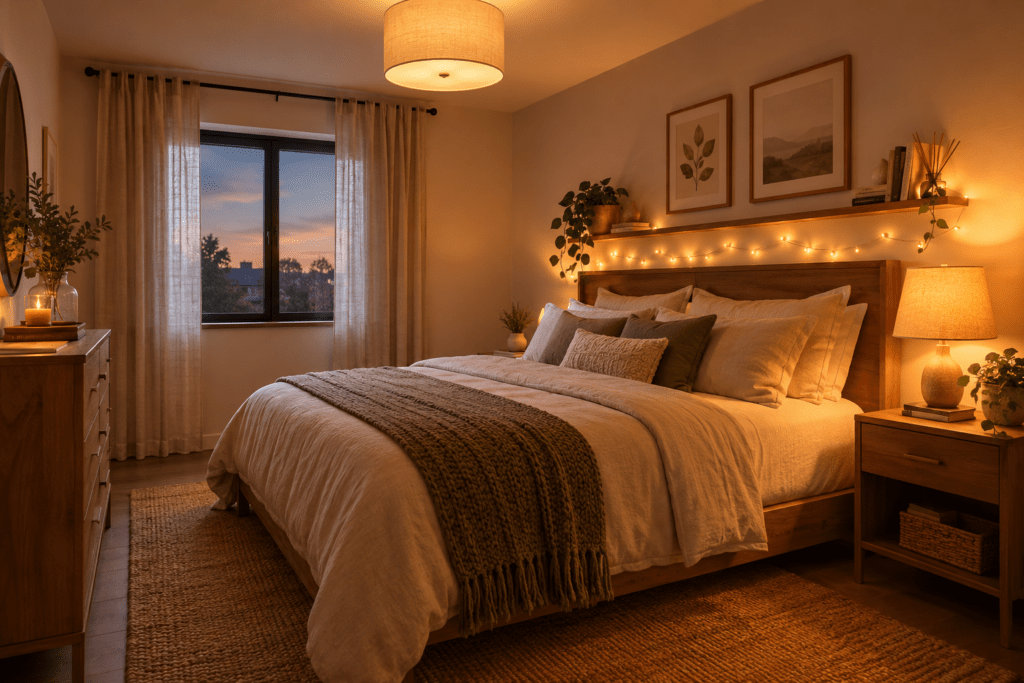
An aesthetic bedroom isn’t about buying trendy items at random. It’s a room where every piece — the color on the wall, the light in the corner, the texture on the bed — supports one clear mood.
That’s really the whole secret behind good aesthetic bedroom ideas: consistency. A room with ten beautiful, unrelated pieces looks cluttered. A room with five pieces that share a color story, a texture story, or a mood looks designed.
How to Identify Your Personal Bedroom Aesthetic
Before you buy anything, answer these three questions honestly:
- What words describe the mood you want? (Calm, cozy, romantic, moody, energetic, clean)
- What colors do you keep saving on Pinterest without meaning to? Your saved pins are more honest than your stated preferences.
- Do you want your room to feel like an escape from the world, or a reflection of your personality? Escape-focused rooms lean cottagecore, coastal, or minimalist. Personality-focused rooms lean boho, eclectic, or maximalist.
Your answers usually point to one of a handful of dominant aesthetics. Knowing the name matters because it gives you a search term, a color palette, and a shopping list — instead of an open-ended “make it cute” mission that never quite finishes.
Why Cohesion Matters More Than Trend-Chasing
IDEA: Pick one dominant aesthetic and let 80% of your purchases support it, with 20% left for personal, non-matching items.
WHY: Rooms built entirely from trending items — with no unifying thread — tend to look like a mood board that never got edited. Rooms that feel “expensive” or “designed,” even on a modest budget, almost always share one thing: restraint.
HOW: Write your aesthetic’s 2–3 core colors and 2–3 core materials (linen, rattan, matte black metal, brushed wood) on a sticky note. Before buying anything, check it against that note.
PRODUCT: A simple corkboard or vision board frame is genuinely useful here — pin fabric swatches, paint chips, and printed inspiration photos so you can see your palette in physical form before you commit to purchases.
TIP: If an item doesn’t fit your palette but you love it, use it as your one intentional “personality” piece instead of buying five of them.
Popular Bedroom Aesthetics for 2026
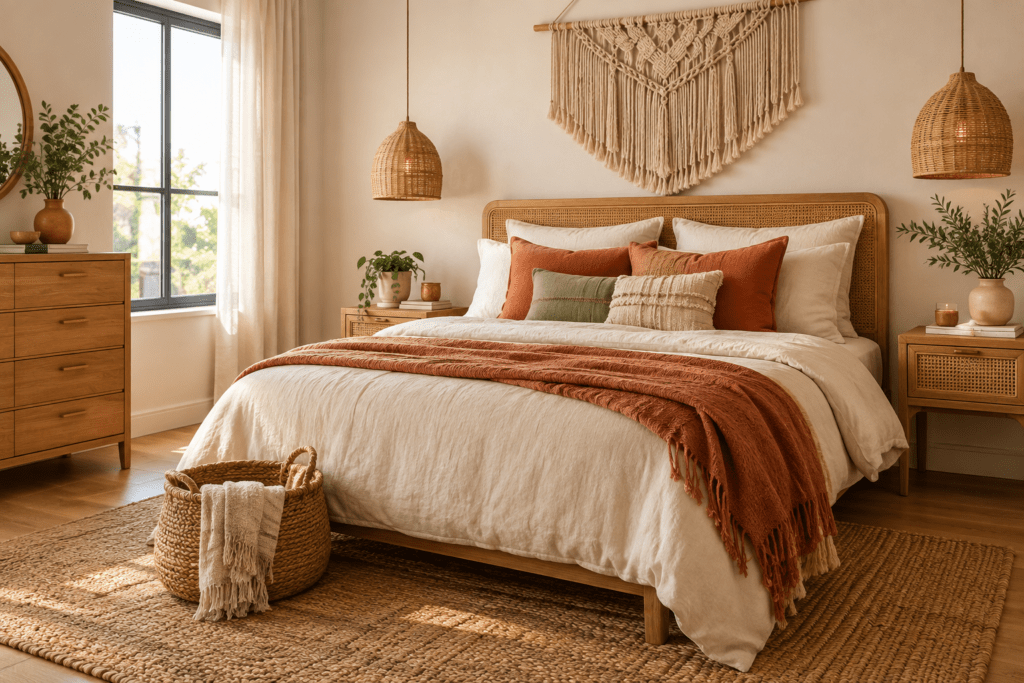
Here’s a quick reference for the most-searched aesthetic bedroom styles right now, what defines each one, and who tends to gravitate toward it.
| Aesthetic | Core Colors | Key Materials | Best For |
|---|---|---|---|
| Boho | Terracotta, cream, olive | Rattan, jute, macramé | Warm, textured, layered rooms |
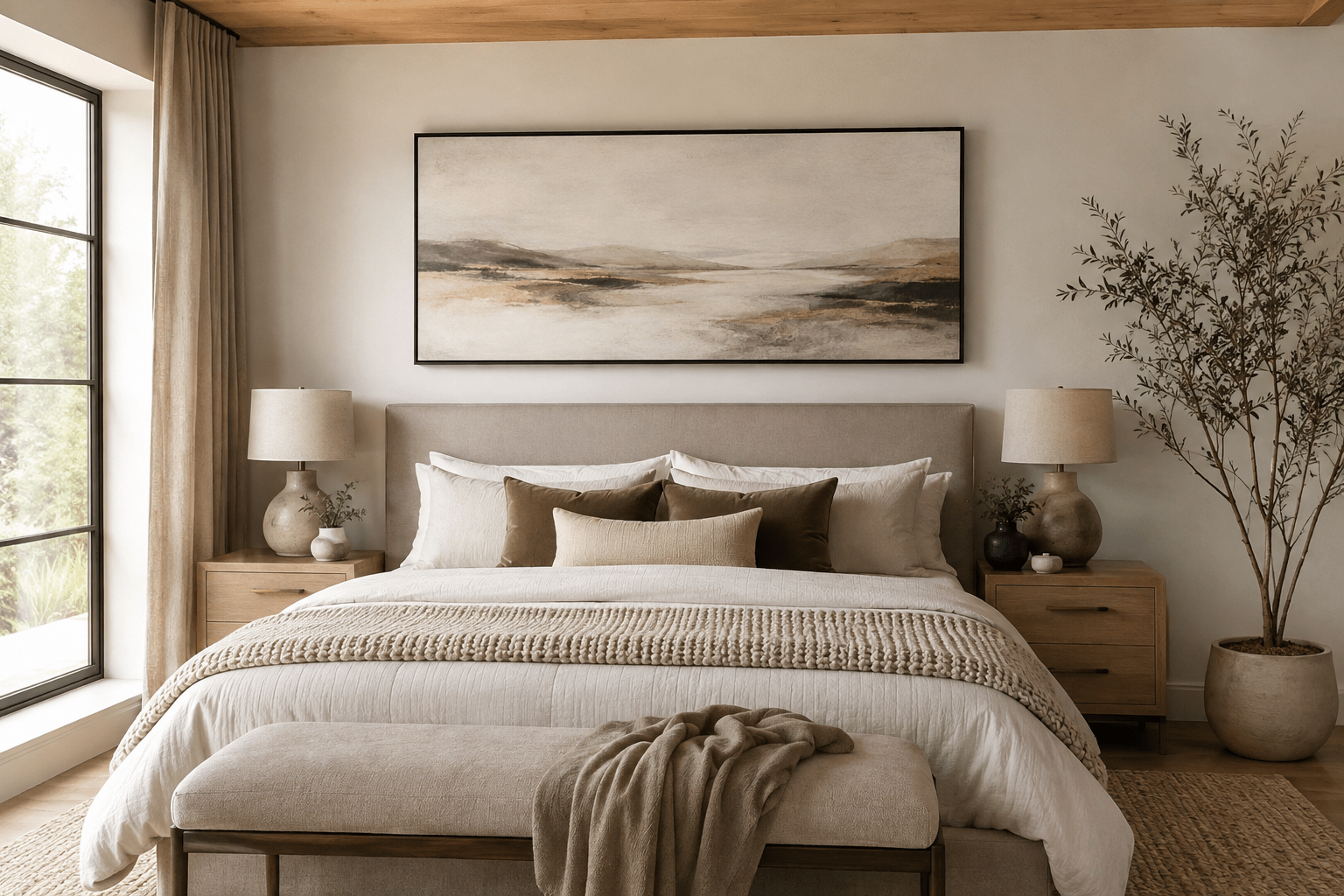
| Minimalist | White, gray, beige | Matte wood, linen | Small or busy-life bedrooms |
| Dark Academia | Espresso, burgundy, forest green | Leather, aged wood, brass | Moody, book-filled spaces |
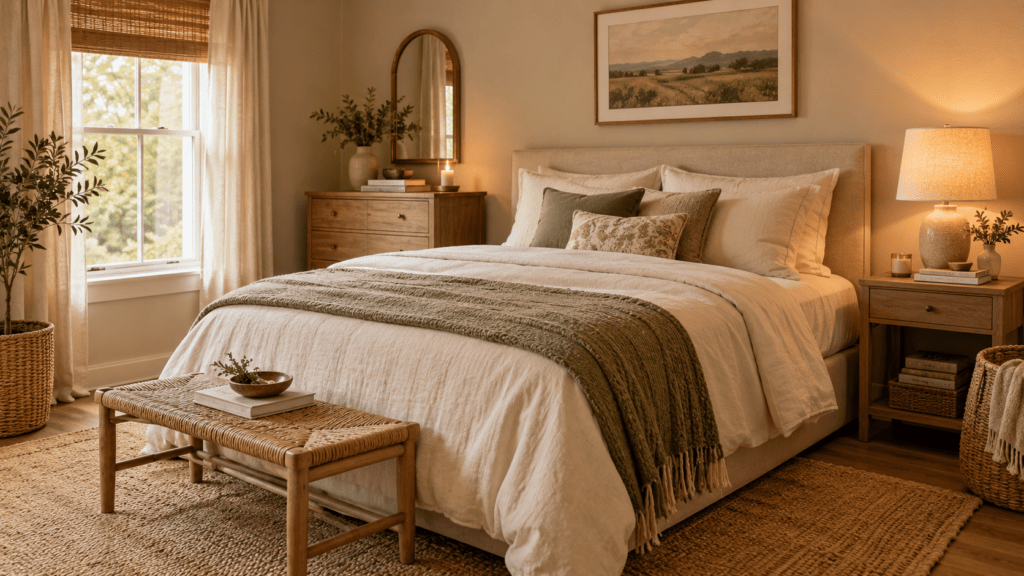
| Cottagecore | Sage, cream, dusty rose | Dried florals, linen, wicker | Soft, nature-inspired rooms |
| Coquette / Danish Pastel | Blush pink, baby blue, cream | Ribbon, tulle, soft velvet | Sweet, romantic, feminine spaces |
| Glam | Champagne, black, ivory | Faux fur, satin, metallics | Bold, luxe statement rooms |
| Scandinavian | White, light wood, soft gray | Raw wood, wool, cotton | Bright, airy, functional rooms |
Boho Aesthetic Bedroom Ideas
IDEA: Layer natural textures instead of adding more color.
WHY: Boho bedrooms fail when people overload on pattern and forget texture. Texture is what makes boho feel intentional rather than chaotic.
HOW: Start with a woven or jute rug as your base layer, then add a macramé wall hanging above the headboard, and finish with textured throw pillows in two coordinating tones.
PRODUCT: A macramé wall hanging is one of the highest-impact, lowest-effort additions in boho decor — it fills wall space without needing to hang multiple frames.
TIP: Keep boho palettes to warm neutrals plus one accent (terracotta, mustard, or deep green). Adding too many colors is the fastest way to tip boho into “cluttered.”
Minimalist Aesthetic Bedroom Ideas
IDEA: Reduce visible surfaces, not just objects.
WHY: Minimalist rooms feel calm because your eyes have fewer places to land. That’s a function of clean surfaces — nightstand tops, dresser tops, floors — not just fewer possessions overall.
HOW: Use closed storage (baskets, drawer organizers) for everyday items, and keep only one or two intentional objects visible per surface.
PRODUCT: Woven storage baskets that slide under the bed or on open shelving let you keep clutter out of sight without an expensive furniture overhaul.
TIP: Choose one accent color, max, and let neutral tones carry the rest of the room.
Dark Academia Bedroom Ideas
IDEA: Anchor the room with warm, low lighting instead of overhead light.
WHY: Dark academia’s moody feel depends heavily on lighting temperature. Bright white overhead lighting flattens the aesthetic instantly, no matter how good your decor is.
HOW: Swap your main bulb for a warm (2700K or lower) bulb, and add a small desk or reading lamp with a fabric or amber-glass shade.
PRODUCT: A vintage-style brass or bronze desk lamp does double duty as both lighting and a decor statement piece.
TIP: Vintage-look mirrors and framed prints of botanical illustrations or classic art reinforce the “old library” feeling without needing actual antiques.
Cottagecore Bedroom Ideas
IDEA: Bring in unstructured, slightly imperfect natural elements.
WHY: Cottagecore’s charm comes from looking lived-in and unforced — perfectly symmetrical, glossy decor works against the aesthetic.
HOW: Add dried or faux florals in a simple ceramic vase, layer a quilted or ruffled duvet, and use woven baskets for storage instead of sleek plastic bins.
PRODUCT: Faux dried flower stems are a low-maintenance way to get the look without upkeep, and they photograph beautifully for Pinterest-style content.
TIP: Avoid anything glossy or metallic in a cottagecore room — matte and textured finishes keep the aesthetic consistent.
Coquette and Danish Pastel Bedroom Ideas
IDEA: Use soft color blocking instead of scattering pastels randomly.
WHY: Danish pastel and coquette rooms can look juvenile if pastels are applied without structure. Grouping pastel tones by zone (bedding vs. wall art vs. accessories) keeps it looking curated.
HOW: Choose one dominant pastel for your bedding, a complementary pastel for your curtains or rug, and use ribbon, bow, or lace details sparingly as accents rather than throughout.
PRODUCT: A ribbon-trimmed or bow-detail throw pillow set is an easy way to add coquette signature details without over-committing.
TIP: Balance soft pastels with one matte neutral (cream or soft gray) so the room doesn’t feel overly saturated.
Small Aesthetic Bedroom Ideas: Making a Tight Space Work
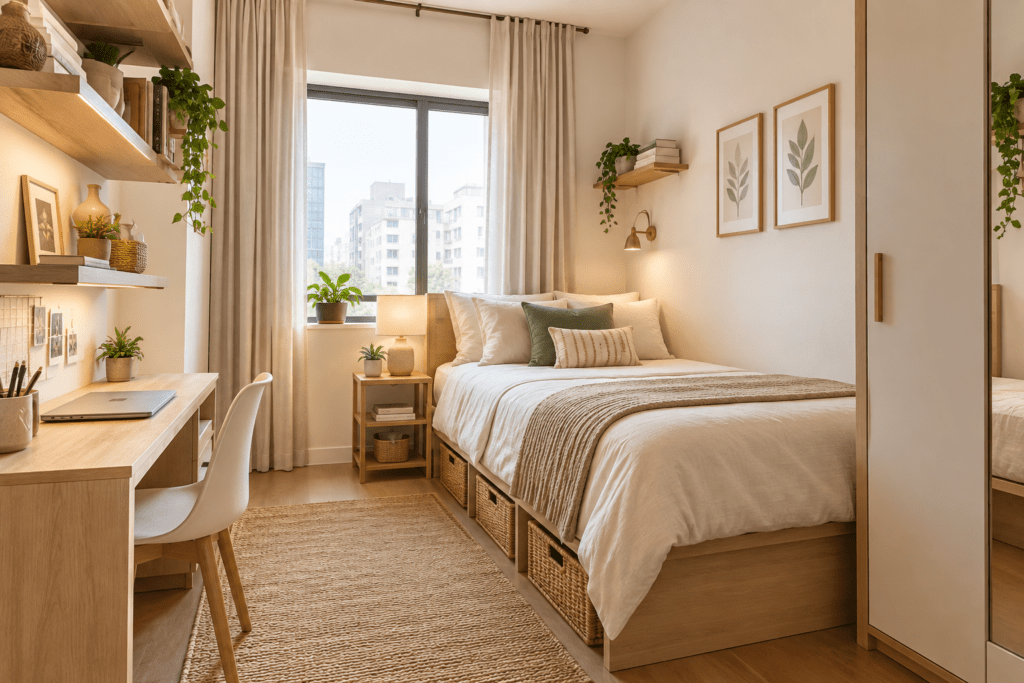
Not everyone is decorating a spacious primary bedroom. If you’re in a dorm, a studio, or a shared room, small aesthetic bedroom ideas need a slightly different approach than full-size ones.
IDEA: Decorate vertically instead of horizontally.
WHY: Small rooms lose floor space fast. Wall space, on the other hand, is almost always underused — and it’s where most of the “aesthetic” visual impact lives anyway.
HOW: Use floating shelves above the desk or bed, hang curtains higher than the actual window frame to create the illusion of height, and choose a bed frame with built-in or under-bed storage.
PRODUCT: A set of floating wall shelves lets you display books, plants, and small decor items without taking up any floor or surface space.
TIP: Stick to a light, unified color palette in small rooms. Dark academia and glam aesthetics can work in small spaces, but they require more disciplined lighting to avoid feeling cramped — lean on warm lamps rather than dark walls if your room is under 120 square feet.
Small Aesthetic Bedroom Ideas for Dorms and Rentals
Renters and dorm residents face an extra constraint: you usually can’t paint, drill, or make permanent changes. That doesn’t mean you’re stuck with plain white walls.
- Use removable adhesive strips instead of nails for wall art and mirrors
- Choose a large area rug to define the room without touching the flooring
- Add a tapestry or fabric wall hanging to cover large areas of wall instantly
- Use string lights on removable clips rather than a fixed installation
Shop Aesthetic Bedroom Decor by Category
Once you’ve picked your aesthetic, the fastest way to execute it is category by category rather than buying randomly. Here’s how to prioritize.
Bedding and Textiles
Bedding covers the largest visual surface in your room, so it should be your first purchase, not your last.
IDEA: Choose one duvet or comforter that anchors your palette, then build everything else around it.
WHY: Because bedding takes up so much visual real estate, changing it has more visible impact per dollar than almost any other single purchase.
HOW: Match your duvet to your aesthetic’s core palette from the table above, then layer in one textured throw blanket and two to three accent pillows in complementary (not identical) tones.
PRODUCT: Waffle-weave or linen-look duvet covers work across almost every aesthetic — boho, cottagecore, and minimalist all use this texture.
Pros: Instant visual transformation; relatively affordable relative to furniture; easy to change again later. Cons: Lower-quality fabric blends can pill or fade with frequent washing, so check material composition before buying.
Lighting
IDEA: Layer three light sources instead of relying on one overhead fixture.
WHY: A single overhead light creates flat, harsh shadows that work against almost every aesthetic. Layered lighting — ambient, task, and accent — is what makes a room feel photographed rather than just lit.
HOW: Combine your ceiling light with a warm-toned lamp on your nightstand or desk, plus a string of LED fairy lights along a headboard, shelf, or window frame.
PRODUCT: Warm white LED string lights (avoid cool blue-white tones) are one of the cheapest, highest-impact aesthetic upgrades available.
Pros: Inexpensive; easy to install without tools; works with virtually every aesthetic. Cons: Cheaper string lights can have a shorter lifespan, so look for ones with a stated hour rating and a low-voltage plug.
Wall Decor and Mirrors
IDEA: Group wall art rather than scattering single pieces.
WHY: A single small poster on a large wall reads as unfinished. A grouped gallery wall or one oversized piece reads as intentional.
HOW: Either commit to one large statement piece (mirror or framed print) centered above your bed, or create a gallery cluster of 3–5 smaller, coordinated pieces.
PRODUCT: An oversized arched or round mirror is one of the most versatile wall pieces — it works in minimalist, glam, and Scandinavian rooms alike, and it visually expands smaller spaces.
Pros: Mirrors add light and make small rooms feel larger; art sets bring instant cohesion. Cons: Large mirrors and framed pieces can be heavy — check your wall type and use appropriate anchors, or a leaning floor mirror if you’re renting.
Rugs and Curtains
IDEA: Use soft furnishings to define “zones” even in a single-room space.
WHY: A rug under your bed or reading chair visually separates that area from the rest of the room, which makes small or multi-purpose bedrooms feel more organized and deliberate.
HOW: Choose a rug large enough that your bed’s front legs sit on it (not just a small mat peeking out from underneath), and pick curtains in a color that echoes — but doesn’t exactly match — your bedding.
PRODUCT: Blackout curtains with a soft, texture-forward fabric (linen-look polyester, for example) support both the aesthetic and better sleep.
Pros: Rugs add warmth and sound dampening; curtains soften hard window lines. Cons: Rugs require regular cleaning and can trap allergens, so consider a low-pile option in shared or dorm spaces.
Storage and Accents
IDEA: Treat storage as decor, not an afterthought.
WHY: Visible clutter undoes an aesthetic faster than almost anything else. Storage that also looks good solves two problems with one purchase.
HOW: Choose woven baskets, fabric bins, or a decorative tray for your dresser top to corral small items instead of leaving them loose.
PRODUCT: A decorative tray on your nightstand or dresser keeps daily items (chargers, jewelry, lip balm) contained without looking like a junk drawer exploded.
Pros: Doubles as function and decor; low cost relative to furniture. Cons: Open baskets still show contents — choose lidded options for anything you don’t want visible.
Buying Guide: How to Choose Aesthetic Bedroom Decor

Set Your Budget Tiers First
Before shopping, decide which tier you’re working with. This prevents impulse buys that don’t add up to a finished room.
| Tier | Focus | Best Starting Purchase |
|---|---|---|
| Starter | 2–3 high-impact swaps | New bedding or lighting |
| Mid-range | Full room refresh | Bedding + lighting + one wall piece |
| Full refresh | Complete room overhaul | Bedding, lighting, wall decor, rug, storage |
Whatever tier you’re in, spend the largest share of your budget on bedding and lighting — they affect the most square footage and the most hours you’ll actually spend in the room.
Renter-Friendly Considerations
If you can’t paint or drill, prioritize:
- Removable adhesive hooks and strips (rated for the weight of your item)
- Large rugs and tapestries to add color without touching walls
- Freestanding furniture (floor mirrors, shelving units) instead of wall-mounted pieces
- Peel-and-stick options only where your lease explicitly allows them
Material Quality Checklist
Cheap materials are the difference between a room that looks aesthetic in photos and one that holds up in daily life.
- Bedding: Look for natural or natural-blend fibers (cotton, linen) over 100% synthetic when possible — they tend to breathe better and hold color longer with washing.
- Furniture: Solid wood or metal frames outlast MDF or particleboard, especially for anything load-bearing like shelving.
- Lighting: Check that string lights and lamps list a safety certification, especially if they’ll run for hours overnight.
Small Aesthetic Bedroom Ideas: Space-Saving Buying Priorities
When square footage is limited, buy in this order: lighting first (cheapest, biggest mood impact), then bedding, then one wall statement piece, then storage. Skip oversized furniture until the essentials are handled — a beautiful daybed means little in a cluttered, poorly lit room.
Common Aesthetic Bedroom Mistakes to Avoid
Over-clustering trend items without a unifying palette. Buying whatever’s popular on TikTok this week — without checking it against your core colors — is the single fastest way to make a room look disjointed instead of designed.
Ignoring lighting temperature. Cool white bulbs undercut warm aesthetics like cottagecore, boho, and dark academia. Always check the Kelvin rating (aim for 2700–3000K for cozy aesthetics) before buying bulbs.
Buying furniture before finalizing a color palette. Furniture is the hardest thing to return or repurpose. Lock in your palette with smaller, cheaper items first (pillows, art, bedding) before committing to bigger purchases.
Skipping scale and proportion. A small 8×10 print above a queen bed looks lost. As a rule of thumb, wall art above a bed should span roughly two-thirds the width of the headboard.
Forgetting the “one plain wall” rule. Not every wall needs decor. A single uncluttered wall gives the eye a place to rest and actually makes the decorated walls look more intentional.
Choosing trend-only pieces with no personal meaning. Rooms that feel truly “you” mix aesthetic-aligned purchases with a few sentimental or personal items — photos, travel finds, handmade pieces. An aesthetic without personality reads as generic, even when it’s technically well-decorated.
FAQ: Aesthetic Bedroom Ideas
What is my bedroom aesthetic called? Compare your favorite colors and materials against the table in this guide. If you’re drawn to warm neutrals and natural texture, you’re likely boho. If you prefer clean lines and light colors, you’re probably minimalist or Scandinavian. If moody, dark tones with vintage touches appeal to you, that’s dark academia.
How can I make my bedroom aesthetic without spending much money? Start with lighting and bedding — they have the highest visual impact per dollar. Rearranging existing furniture and decluttering surfaces also costs nothing and immediately improves how “designed” a room feels.
What’s the difference between coquette, cottagecore, and dark academia? Coquette leans soft, pink, and romantic with ribbon and bow details. Cottagecore leans natural, floral, and rustic with an emphasis on nature. Dark academia leans moody, scholarly, and vintage with deep colors and warm lighting.
How do I decorate a rental bedroom without damaging walls? Use removable adhesive strips and hooks rated for your item’s weight, lean mirrors and art against the wall instead of hanging them, and rely on rugs, curtains, and tapestries to add color and texture without touching the walls or floors.
What lighting makes a bedroom feel more aesthetic? Warm-toned bulbs (2700–3000K) combined with layered light sources — an overhead fixture, a lamp, and string lights — create the soft, photographed look most aesthetic bedrooms share.
How do I make a small bedroom look aesthetic? Focus on vertical space (floating shelves, tall curtains), a unified light color palette, and multi-purpose furniture with built-in storage. These are the core small aesthetic bedroom ideas that make limited square footage feel intentional rather than cramped.
How many wall art pieces should I hang in my bedroom? Either one large statement piece sized to roughly two-thirds the width of your headboard, or a coordinated gallery cluster of three to five smaller pieces. Avoid single small pieces on large walls — they tend to look unfinished.
Do I need to follow one aesthetic exactly, or can I mix styles? You can absolutely mix styles as long as you keep a consistent color palette and material story across the room. Most real bedrooms blend two aesthetics (like boho-minimalist or cottagecore-coquette) rather than following one style perfectly.
Conclusion
The best aesthetic bedroom ideas aren’t about copying a Pinterest board exactly — they’re about identifying the mood you actually want, choosing a palette that supports it, and buying with intention instead of impulse.
Start with lighting and bedding, since they cover the most visual ground for the least effort. Layer in wall decor, textiles, and storage once your palette feels locked in. And if you’re working with a smaller footprint, lean on the small aesthetic bedroom ideas in this guide — vertical storage, unified color, and renter-friendly swaps — to get the same designed feeling without needing extra square footage.
A genuinely aesthetic bedroom isn’t the one with the most decor. It’s the one where every piece belongs.
Visit the link for the more ideas about Small Bedroom Decor.